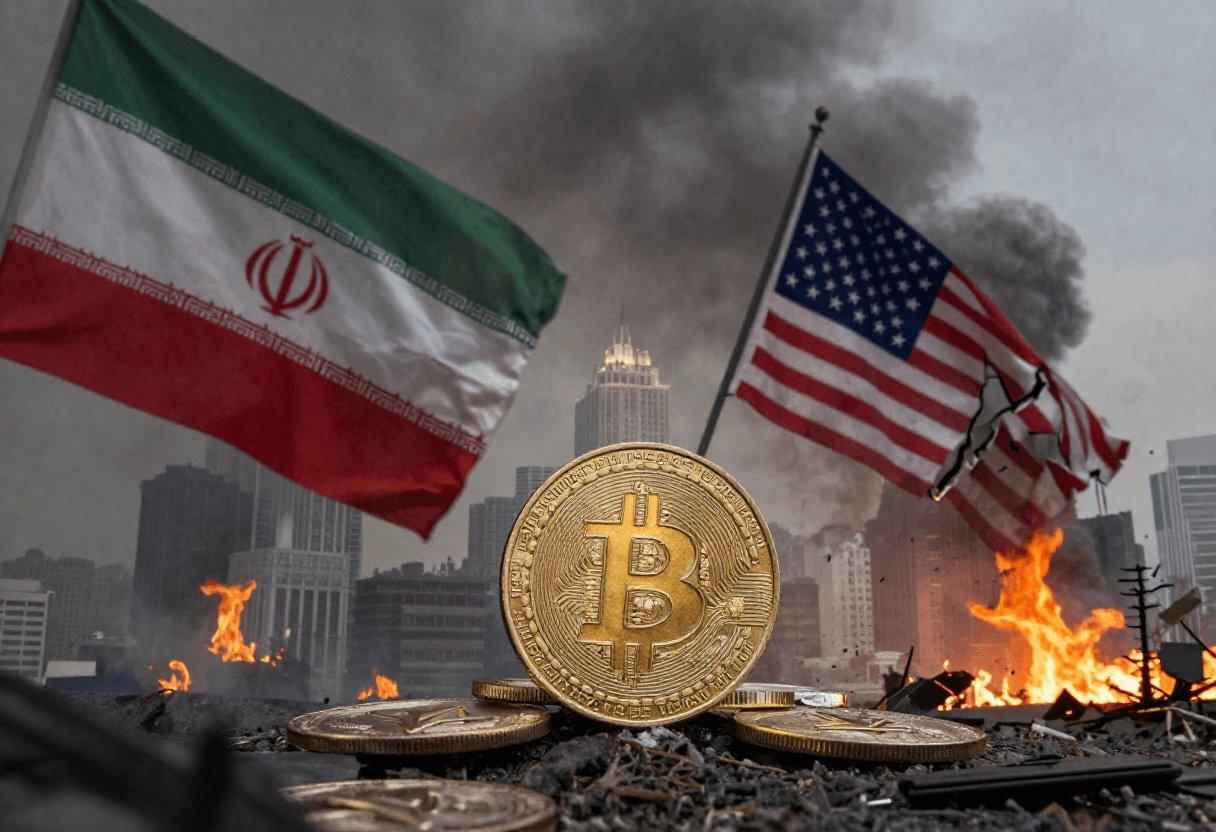
This weekend, the cryptocurrency market has displayed remarkable resilience, remaining relatively unchanged despite escalating tensions between the United States and Iran. As US forces initiated a third wave of strikes and Iran announced the closure of the crucial Strait of Hormuz, Bitcoin’s price barely flinched.
Currently, Bitcoin is trading around $63,900, reflecting a slight dip of 0.3% over the past day, yet showing a gain of about 2% for the week. Ethereum stands at approximately $1,803, while XRP trades near $1.09, Solana around $76.60, and Dogecoin at $0.073. The total market capitalization of cryptocurrencies is approximately $2.28 trillion. With traditional markets such as oil, stocks, and bonds closed for the weekend, Bitcoin is one of the few assets responding in real time to the geopolitical developments, although a more significant reaction from crude oil markets is anticipated when trading resumes on Monday.
The Recent US-Iran Conflict
The situation escalated significantly on July 7, when US Central Command reported that American forces struck over 80 targets in Iran in retaliation for attacks on commercial vessels in the Strait of Hormuz. This action came alongside renewed sanctions on Iranian oil sales. On July 8, President Trump declared that the ceasefire with Iran was effectively over. Over the weekend, tensions escalated further when Iran's Islamic Revolutionary Guard Corps shut down the Strait of Hormuz after warning a vessel that was using an unauthorized route, a serious development given the strait's significance as a global oil chokepoint.
Initial Market Reactions
Following Trump’s announcement regarding the ceasefire, the crypto market experienced a typical risk-off response, with Bitcoin’s price dropping by 2.5%. Altcoins suffered greater losses, culminating in approximately $450 million in leveraged positions being liquidated, with altcoins accounting for a substantial portion of this total. However, by July 9, the sentiment shifted positively, with Bitcoin climbing back to $63,000, Ethereum up by 0.75%, and Nasdaq 100 futures showing gains despite the geopolitical turmoil.
Understanding Bitcoin's Resilience
The key factor underpinning Bitcoin’s stable performance during this crisis seems to be a shift in how traders perceive the geopolitical risks. Instead of viewing tensions in the Middle East as a direct threat to cryptocurrencies, investors now seem to be interpreting these events in relation to inflation and interest rates. Analysts suggest that traders are increasingly correlating Bitcoin's movements with Treasury yields rather than traditional safe havens like gold or crude oil, which have shown weaker performances amid rising tensions. This could indicate a shift towards Bitcoin as a rates-sensitive asset.
As traders keenly observe the ongoing situation, the psychological barrier around the $60,000 mark looms large. Sustaining this level through any potential escalations may bolster the notion of Bitcoin as a rates hedging asset, while a fall below could suggest a temporary calm in the markets.
This material is informational and should not be considered as financial advice.