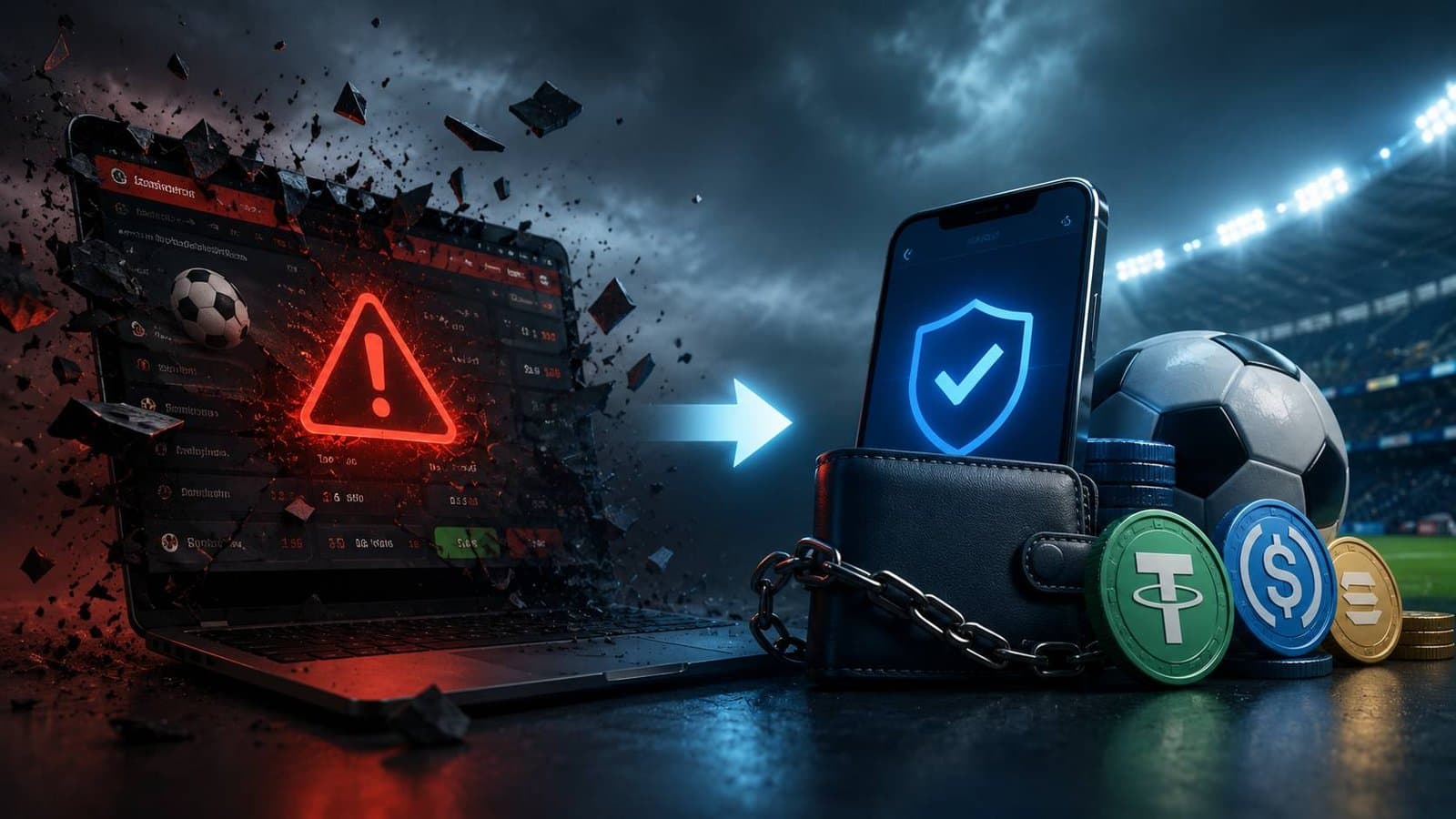
Imagine logging into your favorite crypto sportsbook one evening, only to find the site won’t load. The silence from their social media accounts is deafening, and emails to support bounce back. Your balance is still visible on the blockchain, yet you can’t access it through the platform anymore. This scenario raises an important question for bettors: what happens to your funds if a crypto sportsbook shuts down?
The answer varies significantly based on who was actually managing your money. A sportsbook balance is not a single entity; it can either be funds held by the operator or funds that remain in your personal wallet. This distinction critically affects what you experience when a platform ceases operations.
If the sportsbook is holding your balance, then a closure effectively locks your funds behind a door that only the operator can unlock. In contrast, if your money was in a wallet you control, losing access to the platform merely means you’ve lost a venue to place bets, not your actual funds.
Understanding Custodial vs. Non-Custodial Models
Most crypto sportsbooks operate on a custodial basis, where the operator manages player funds during bets. This setup means that you are relying on the operator to be both solvent and trustworthy. When issues arise, such as insolvency or an exit scam, your balance could become inaccessible. For example, in 2026, the offshore sportsbook Jazz Sports disabled customer withdrawals as its situation deteriorated, leaving users helpless to retrieve their money.
Past incidents within the crypto landscape, like the collapse of FTX, which held only a small fraction of the required assets, have highlighted the risks associated with custodial models. Similarly, QuadrigaCX took around $190 million offline when its founder died, leaving users without access to their funds.
Recovery in these scenarios is often challenging, if not impossible. Although blockchain forensics can trace transactions, they don’t guarantee recovery. Unless authorities intervene or the operator returns funds voluntarily, having proof of ownership amounts to little.
However, licensing may provide some level of protection, provided there are rules in place to segregate funds. Unfortunately, offshore registrations often complicate disputes, routing them back to the operator rather than a regulatory body.
The Advantage of Non-Custodial Models
On the other hand, non-custodial sportsbooks function differently. They settle bets directly from your wallet through smart contracts, meaning the operator never has control over your funds. This arrangement significantly reduces counterparty risk, as there’s no operator-held balance that could freeze during a shutdown.
In essence, while the closure of a crypto sportsbook can be alarming, understanding how funds are managed is crucial. Knowing whether your funds are in a custodial or non-custodial system can help you navigate potential risks. As the crypto betting market continues to evolve, players must stay informed about these dynamics to protect their investments.
This material is for informational purposes only and should not be considered financial advice.