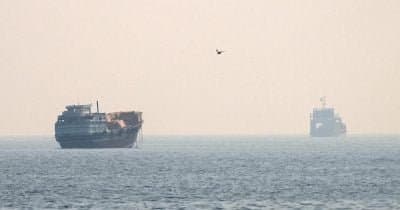
The US military successfully struck a maritime facility of the Islamic Revolutionary Guard Corps (IRGC) at Kish port on July 14, resulting in visible damage to IRGC Golf-class patrol boats. This action shows a growing campaign against Iranian naval operations that have escalated in recent weeks.
The military response is not a mere isolated incident. It is part of a broader series of strikes initiated in early July 2026, aimed at diminishing IRGC's capabilities in the Persian Gulf, particularly in light of their involvement in attacks on commercial vessels, including the Cyprus-flagged GFS Galaxy. Such Iranian actions have posed a significant threat to the Strait of Hormuz, a critical artery for global oil supply.
Prior military operations on July 7 reportedly targeted over 60 IRGC vessels and related infrastructure, marking a concerted effort to safeguard international shipping routes. The strike at Kish port was a follow-up, designed to maintain pressure on Iran rather than escalate tensions further.
Kish Island, recognized for its free-trade zone status, presents a unique environment where military and civilian infrastructure coexist. This dual-use nature complicates the political ramifications of US military actions in the region.
Interestingly, the cryptocurrency market is also feeling the effects of these military developments. Following the July strikes, Bitcoin traded around $63,800, recovering from a dip to $62,870 amid fears linked to the rising tensions. Furthermore, the US Treasury recently seized approximately $1 billion in Iranian-linked digital assets, highlighting a financial strategy that extends beyond military confrontation and directly impacts the space. Iran has historically leveraged cryptocurrency to bypass sanctions, and the recent asset seizure indicates that the US is intensifying its efforts to cut off this route.
Investors should keep a close eye on Bitcoin's current position, as it hovers near $63,800 following the destruction of numerous IRGC vessels. This suggests that the market is beginning to react to the evolving geopolitical landscape.
This material is informational and should not be considered financial advice.