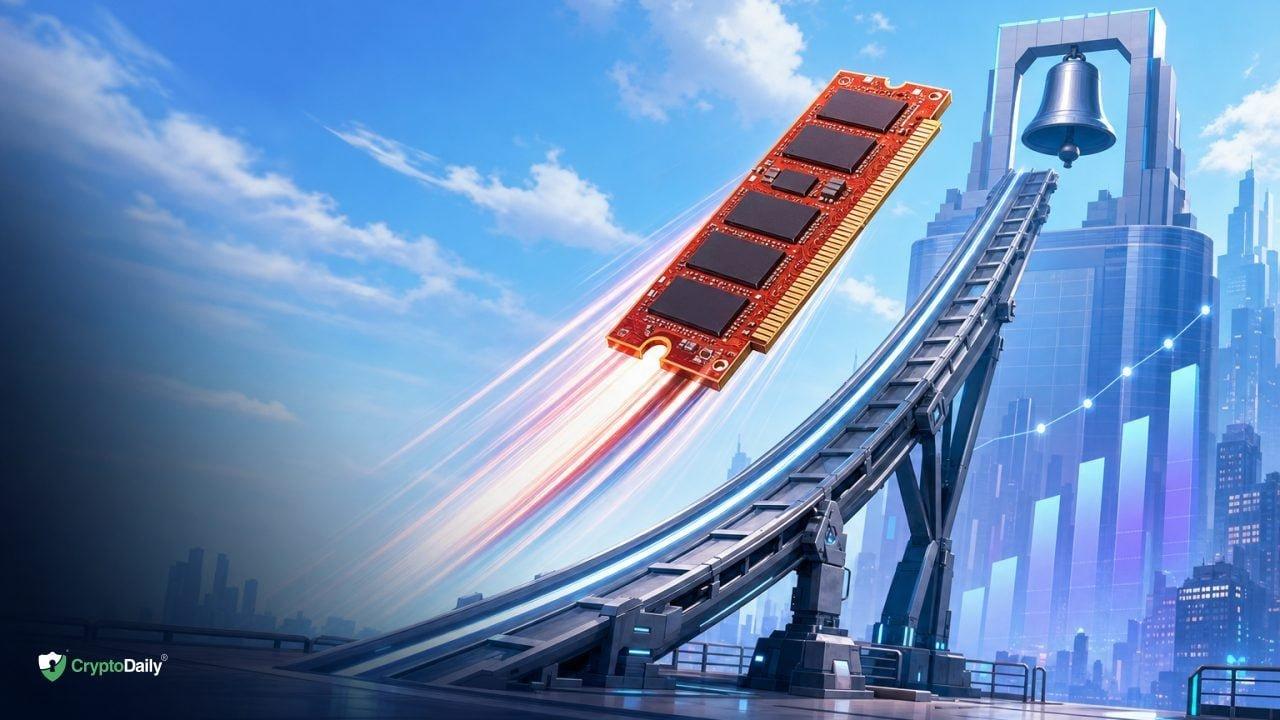
The buzz around the stock market intensified recently with the spectacular debut of SK Hynix on Nasdaq. The company successfully sold 177.9 million American Depository Receipts (ADRs) at a price of 149 dollars each, netting an impressive 26.5 billion dollars. This monumental move represents the largest share sale by a foreign firm in U.S. history, and it lands squarely within the narrative of the burgeoning artificial intelligence (AI) sector.
For those monitoring the S&P 500's engagement with AI, this event is less about the individual stock of SK Hynix and more about the broader implications: the ongoing constraints in memory supply are pivotal, and there's a palpable willingness among investors to fund these challenges. It signals that memory is now recognized as a key bottleneck in the AI hardware supply chain.
Reflecting on my discussions with semiconductor portfolio managers earlier this year, it was clear that the demand landscape was shifting. Many companies were still pushing forward their orders, particularly for high bandwidth memory (HBM), even as discussions around GPU sales began to cool off. Contracts in the dynamic random-access memory (DRAM) space remained solid, with industry insiders warning of supply bottlenecks in server configurations.
As SK Hynix’s ADR plans came to fruition, the market's response was not surprising. The level of oversubscription reportedly more than seven times indicates that appetite for memory exposure linked to AI is robust, underscoring the importance of sufficient memory bandwidth to avoid degrading performance and return on investment in cloud computing.
With an initial trading ticker of SKHYV set to transition to SKHY shortly, the enthusiasm surrounding SK Hynix's launch signals confidence that memory scarcity will persist longer than previously anticipated. This is a critical message for the market, especially because the firm occupies a central role in HBM supply.
Market Implications
Raising a staggering 26.5 billion dollars in a climate already inundated with substantial AI capital expenditure headlines is noteworthy. This milestone not only establishes a benchmark for how the equity market values memory capabilities but also expands the scope for investment in technologies surrounding the GPU landscape.
Moreover, the nature of the oversubscription reflects the broader sentiment: investors who may have missed the earlier waves of AI success are now eyeing memory suppliers as a vital entry point. While this does not guarantee a steady rise in stock prices, it does demonstrate an increasing eagerness to be part of the next technological shift. With more potential buyers positioned at the gates, the dynamics could alter how memory stocks are perceived going forward.
This article is for informational purposes only and does not constitute financial advice.