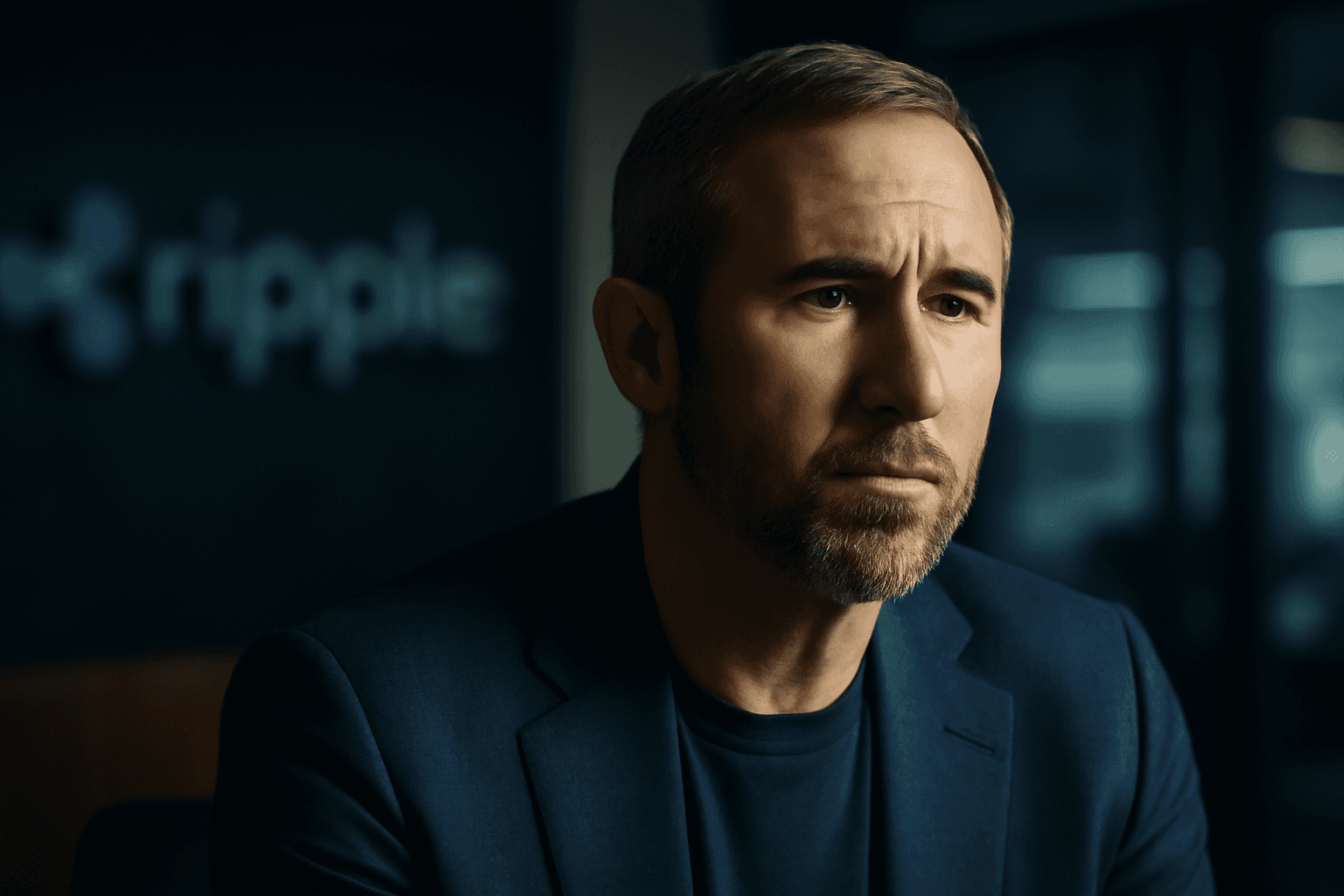
Ripple CEO Brad Garlinghouse recently shared insights into the difficult choices faced by the company following the lawsuit filed by the U.S. Securities and Exchange Commission (SEC) in December 2020. The lawsuit accused Ripple, along with Garlinghouse and co-founder Chris Larsen, of conducting unregistered securities sales through its cryptocurrency, XRP, raising more than $1.3 billion in the process. Faced with this legal battle, Garlinghouse revealed that there were serious discussions about shutting down the company entirely.
During a talk at the University of Kansas School of Business, Garlinghouse explained that he and Larsen considered distributing Ripple's XRP holdings to shareholders and dissolving the business. He noted that this option seemed like the easier route against an opponent with “infinite power and resources.” However, the potential loss of hundreds of jobs ultimately influenced their decision to fight back.
Despite the uncertainty surrounding the outcome, Garlinghouse acknowledged that they chose to defend Ripple in court. He later reflected, “I’m glad in retrospect, but that was not obvious at the time.” The legal struggle proved to be expensive, with Ripple reportedly spending around $150 million on litigation. Nevertheless, the company managed to protect numerous jobs during this challenging period.
The lawsuit's impact stretched across Ripple’s operations, affecting their business in the U.S. and complicating relationships with partners and institutional clients. Garlinghouse also mentioned that he had met with SEC officials multiple times between 2017 and 2019 without legal representation, expressing frustration that they were never warned about XRP potentially being classified as a security.
In July 2023, Judge Analisa Torres issued a mixed ruling, determining that Ripple's programmatic XRP sales on public exchanges did not constitute securities transactions, while some direct sales to institutional buyers did violate securities laws. As a result, Ripple was ordered to pay a $125 million civil penalty and was restricted from engaging in unregistered institutional sales.
While Ripple attempted to settle the lingering issues in 2025, proposing a reduced penalty of $50 million, Judge Torres rejected the settlement, leaving Ripple to navigate the complex aftermath of the lawsuit.
This article is for informational purposes only and does not constitute financial advice.