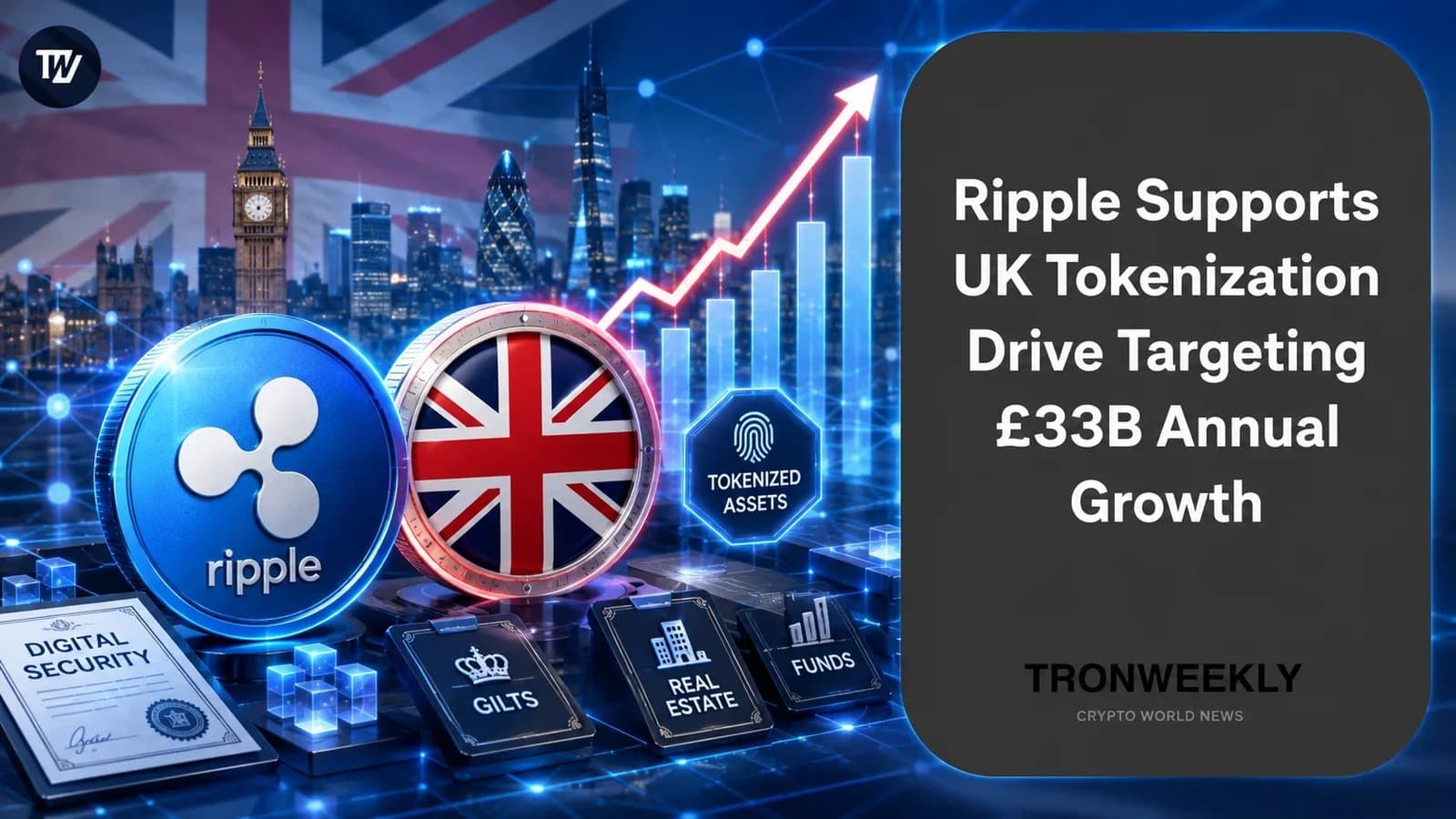
Ripple is stepping into the spotlight with its support for a new initiative in the UK aimed at transforming wholesale financial markets through tokenization. This strategy is not just theoretical; it seeks to implement real-world applications for digital bonds, funds, collateral, and repo transactions, moving beyond mere trials.
In April, HM Treasury appointed Chris Woolard as the Wholesale Digital Markets Champion, leading a task force of 54 firms from the financial and digital asset sectors, with Ripple among the key players backing this initiative. The vision is ambitious, as a report suggests that tokenization could inject up to £33 billion into the UK economy by 2035, along with an estimated £14 billion in annual tax revenues.
The potential for tokenized assets on a global scale is staggering, with projections suggesting a market worth $88 trillion by 2035. For the UK to capture a substantial share, it will need to establish a robust infrastructure and regulatory framework that supports these innovations.
Real-World Applications of Tokenization
Currently, onchain funds, bonds, and repo transactions are not just concepts but are already operational, presenting financial instruments that outperform their traditional counterparts in terms of cost, speed, and efficiency. This initiative consists of nine action groups focusing on various aspects such as collateral management, settlement processes, legal standards, infrastructure development, and market accessibility, all specifically targeting wholesale finance.
The first application being targeted is tokenized repo transactions. These involve securities used for financing short-term cash loans. The task force plans to streamline this entire transaction process by spring 2027, showcasing the UK’s commitment to leading the charge in this new financial frontier.
Additionally, the tokenization program is set to bolster the DIGIT project, which aims to create a digital gilt bond system for the UK government. The report emphasizes the need for the DIGIT pilot to launch by early 2027.
As part of its ongoing efforts, the report encourages regulators to clarify whether tokenized government bonds can be utilized as collateral instruments. This could enable organizations to leverage digital securities more effectively, reducing reliance on separate pilot projects.
The UK has made strides in allowing tokenized securities to be tested within regulated frameworks. Recent collaborations between the Financial Conduct Authority and the Bank of England with 16 firms signify a proactive approach to fostering innovation in financial markets. With Ripple's involvement, the stage is set for a significant evolution in how financial transactions are conducted, potentially reshaping the landscape for years to come.
This material is for informational purposes only and should not be considered financial advice.