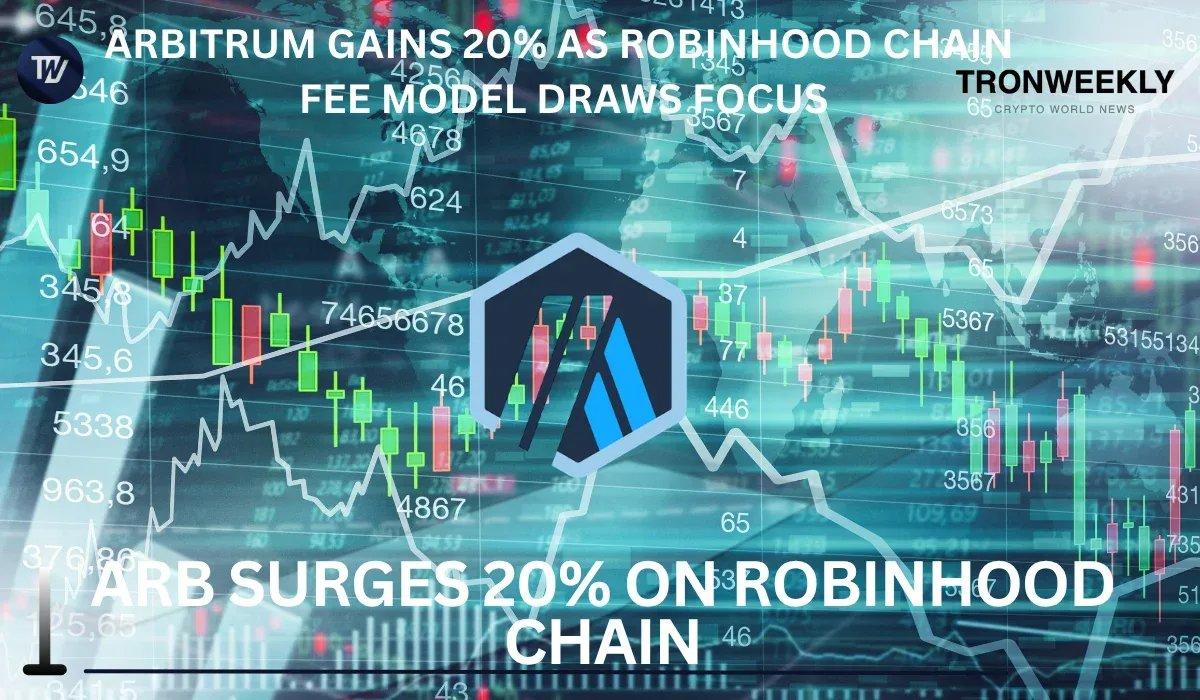
Arbitrum (ARB) has recently surged by about 20% as investors are increasingly recognizing the economic ties between the protocol and the Robinhood Chain. This upward movement follows a wave of discussions within the cryptocurrency community regarding Arbitrum's share of fees generated from Robinhood’s Layer-2 blockchain. Traders are now reassessing the long-term value of ARB based on this renewed understanding.
According to analyst Ignas, founder of Pink Brains and a DeFi researcher, the market's realization that Arbitrum earns 10% on all fees from the Robinhood chain has transformed ARB into a “proxy trade” for the success of Robinhood Chain, particularly as meme coin activities have surged on the network.
Initially, investors did not fully grasp the economic implications of Robinhood Chain, but as awareness grew, so did ARB’s market price. The recent spike in trading activity has been a strong contributor to this price recovery. However, Ignas did advise caution, noting that trading ARB should not solely be based on fee accrual, especially considering the current revenues are still relatively low. He cautioned that if Robinhood Chain cannot maintain its recent meme coin rally, the revenue may not meet expectations.
Robinhood Chain’s Financial Performance
Recent data from Entropy Advisors reveals that Robinhood Chain has amassed approximately $171,180 in cumulative fee revenue, with Layer-1 settlement costs remaining below $1,000. Additionally, gross profits have exceeded $170,000, indicating strong margins amidst rising network usage.
Such figures provide insight into why traders are now more focused on Arbitrum’s ecosystem. If Robinhood Chain can sustain high transaction volumes, the fee-sharing structure could deliver ongoing value to the wider Arbitrum network, beyond mere speculative price shifts.
Implications for ARB Investors
The narrative for ARB holders goes beyond a fleeting market rally. Sustainable revenue models in infrastructure projects tend to draw more institutional and long-term investor interest compared to tokens that are merely speculative. This trend is not an isolated incident; it reflects a broader movement among Ethereum Layer-2 networks. These projects are increasingly pursuing partnerships that foster economic activity, thereby strengthening blockchain ecosystems through shared incentives.
The pivotal question moving forward is whether Robinhood Chain can maintain user engagement after the recent influx of meme coin trading. A decrease in transaction volumes could lead to a slowdown in fee generation, which would diminish one of the key drivers behind the recent optimism surrounding ARB. Conversely, ongoing developer adoption and the growth of decentralized applications could pave the way for a more stable revenue stream.
This material is informational and should not be considered financial advice.