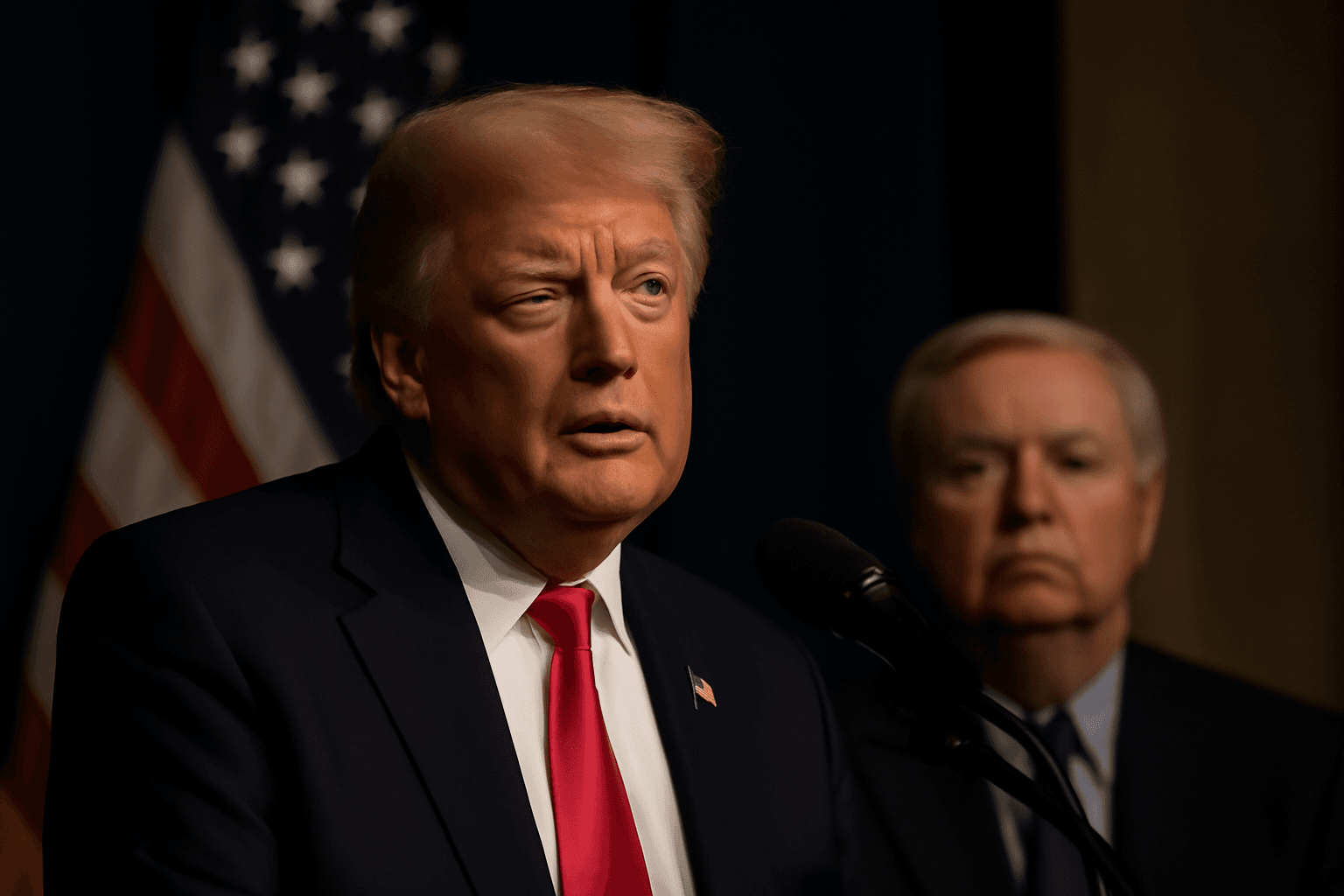
In a recent statement, former President Donald Trump urged the Senate to swiftly pass the Clarity Act, a notable legislative proposal aimed at regulating the cryptocurrency industry. His appeal comes as a tribute to Senator Lindsey Graham, who has been a staunch advocate for clearer cryptocurrency regulations. Trump's remarks underscore the urgency of the situation, with the crypto bill facing significant time constraints.
During his address, Trump articulated concerns about international competitors in the technology space, particularly in crypto and artificial intelligence, cautioning that other nations are attempting to outpace the U.S. in these vital sectors. This declaration resonates with ongoing discussions about maintaining American leadership in innovation and technology.
Patrick Witt, an advisor on crypto at the White House, also shared insights this week, labeling it a critical period for the progression of the crypto bill. The emphasis on regulation highlights the growing importance of establishing a structured framework for digital currencies, especially as the industry continues to expand and evolve.
The Clarity Act aims to provide a comprehensive approach to crypto regulation, ensuring transparency and security for investors and users alike. As lawmakers deliberate on the proposal, the potential ramifications for the market are significant, which can either bolster confidence among investors or create uncertainty depending on the outcome.
With national and global implications at stake, the push for legislation like the Clarity Act becomes increasingly vital. The debate surrounding crypto regulation is not just about compliance but encompasses broader economic strategies as the U.S. seeks to solidify its position in the crypto landscape.
This material is informational and not financial advice.