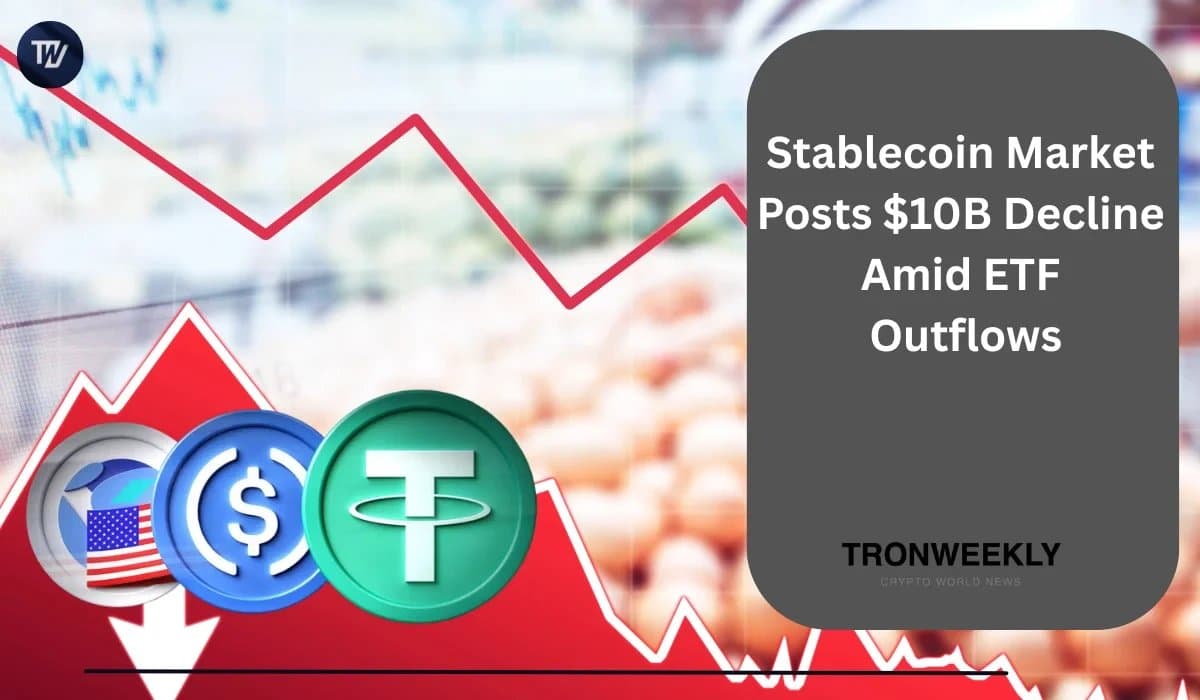
The stablecoin market has experienced a significant downturn, shedding approximately $10 billion after reaching a peak in May 2026. In June, the total supply decreased by $7.7 billion, culminating in an overall figure of nearly $312 billion. This marks the largest monthly decline since the collapse of TerraUSD in May 2022.
Data from DefiLlama indicates that the current supply stands at about $312.23 billion. Within this, Tether's USDT constitutes around $184.15 billion, while Circle's USDC accounts for approximately $73.41 billion. The two assets continue to dominate liquidity in the global stablecoin market.
Since May, USDT has fallen to about $190 billion, a decline that translates to roughly $6 billion in exited stablecoins. Similarly, USDC has dipped around $7 billion from its March level of approximately $80 billion. This downturn represents a substantial portion of the total contraction observed. Interestingly, while leading tokens faced declines, smaller regulated issuers experienced growth during this period, although their gains were not enough to counterbalance the losses of the major players.
Paul Howard, a senior director at trading firm Wincent, described this downturn as merely a minor pullback, emphasizing that the industry remains poised for long-term growth. He pointed out that the current decrease is significantly smaller than the 26% contraction seen in 2022, which was exacerbated by the collapse of the Terra protocol and the insolvency of FTX.
The drop in stablecoin supply may point to redemptions for bank dollars or indicate that capital is moving away from the crypto space. Traders rely heavily on stablecoins for settling transactions and as quote currencies, which makes this reduction particularly noteworthy. Concerns have arisen about the impact on liquidity in the market as pressure to sell increases.
In June, U.S.-listed Bitcoin exchange-traded funds suffered outflows exceeding $4 billion, marking their worst performance since launch. In contrast, tokenized real-world assets have shown a different trajectory, with their on-chain valuation surpassing $30 billion, driven by demand for blockchain products, as highlighted by a remarkable 145% surge in tokenized equity trading volume.
This article is for informational purposes only and should not be taken as financial advice.