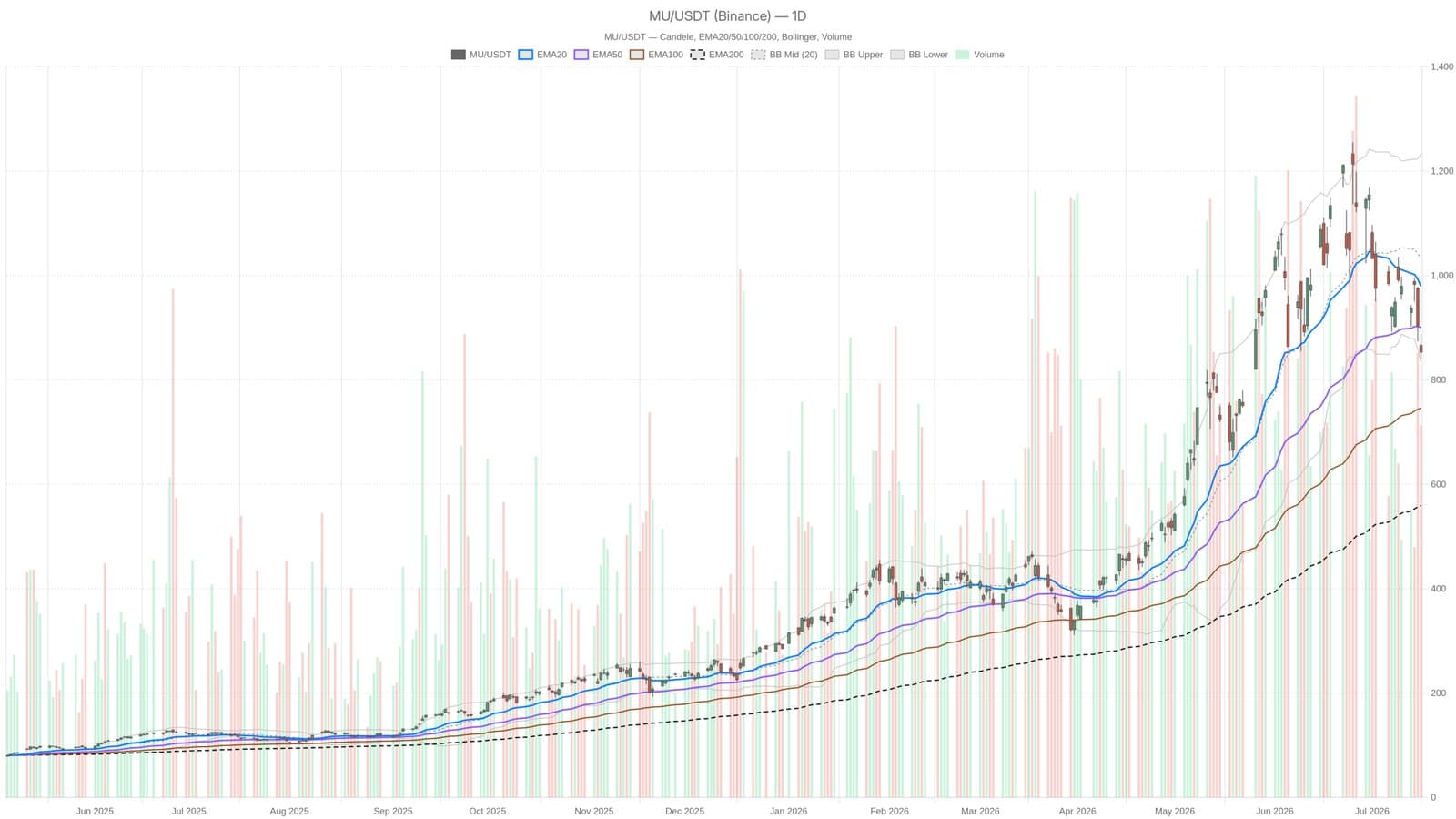
Micron Technology's shares have taken a hit as investors express doubts about the effectiveness of new automotive contracts in safeguarding its core DRAM business. The stock dropped approximately 4.6% in premarket trading to around $862.70, following an 8% decline the day before. This downturn highlights worries about Micron’s capacity to maintain pricing power amidst an uncertain semiconductor market.
Auto Contracts Provide Limited Security
The recently announced long-term agreements aimed at stabilizing revenue streams are a step forward for Micron. However, these contracts only cover about 20% of its DRAM output, which accounts for roughly 76% of the company's revenue. This limited coverage leaves a substantial portion of the business vulnerable to market fluctuations, particularly if supply increases or demand dwindles.
In comparison, NAND storage products, which make up about 24% of revenue, enjoy more solid contract protection, as approximately one-third of their volume is secured by agreements. This disparity has raised alarms among investors who anticipated that the auto contracts would offer a more substantial hedge against market volatility.
Investors Skeptical About Memory Demand
While the automotive deals are significant and include take-or-pay clauses, they might not be enough to alleviate concerns over Micron's DRAM margins. CEO Sanjay Mehrotra has stated that these contracts will enhance revenue stability and reduce exposure to unpredictable pricing in the spot market. Nevertheless, investors are wary, focusing on the immediate need to protect DRAM margins, which remain critical to the company's overall performance.
As the semiconductor landscape continues to evolve, Micron predicts industry shortages will persist beyond 2027, but the market's current uncertainties leave investors in a cautious stance.
This article is for informational purposes only and should not be considered financial advice.