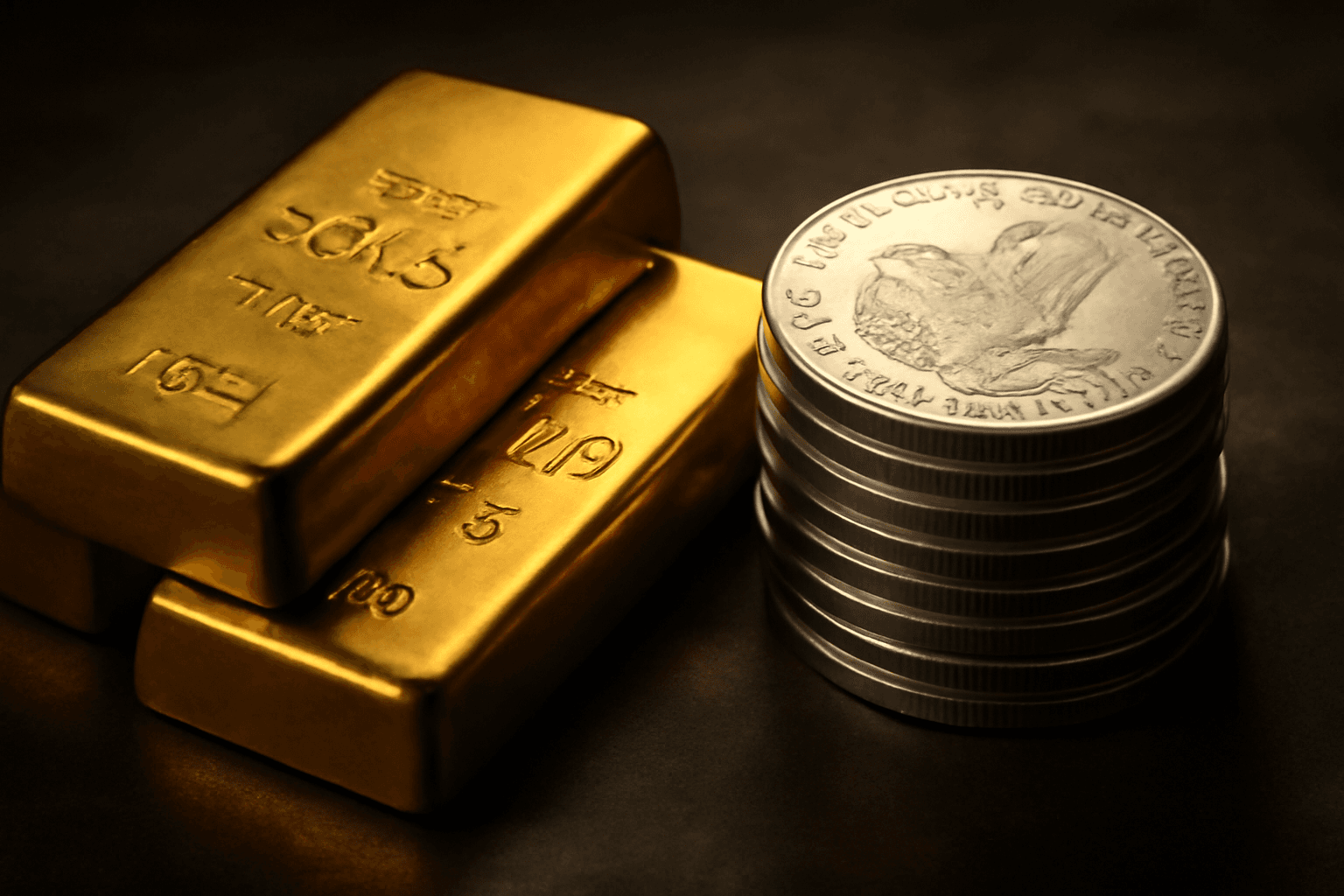
In the most recent market session, gold and silver showcased their best weekly performance in over a month following a surprisingly weak U.S. jobs report, causing traders to reassess the Federal Reserve's monetary policy.
Market Movements
On July 3, gold rose to $4,175 after data indicated that U.S. payrolls increased by only 57,000 in June. By the morning of July 4, gold had reached $4,187 per ounce. Meanwhile, silver experienced a substantial rally, climbing more than 7% to surpass $62, effectively narrowing the gold-to-silver ratio to 66.9.
Gold’s price jumped from around $4,012 per ounce on June 30 to approximately $4,175 by July 3, reflecting a gain of about 2.1%. This marked the first upward movement for gold in five weeks. As of July 4, the price was trading at $4,187 per troy ounce.
Jobs Report Impacts Rate Projections
The U.S. Bureau of Labor Statistics revealed that nonfarm payrolls added only 57,000 jobs in June, which fell considerably short of the economist expectation of around 110,000. The unemployment rate ticked up to 4.2%, further indicating a slowdown in job growth.
In reaction to these developments, traders revised their forecasts, reducing the likelihood of a September interest rate hike from 66% to about 53%. This shift in expectations weakened the dollar and decreased real yields, which have been beneficial for gold and silver, as neither metal yields interest. According to analysts at OCBC, the outlook for gold was described as 'cautiously constructive' following this disappointing data.
Silver's Industrial Appeal
Silver's dramatic rebound is attributed to its unique role both as an investment and an essential industrial commodity. Demand for silver has remained high, driven by applications in solar technology, electronics, and electric vehicles, despite a price dip in the second quarter.
The narrowing of the gold-to-silver ratio to 66.9 reflects silver's recovery as it catches up to gold's prior performance.
Expert Opinions
Gold economist Peter Schiff addressed the dip below $4,000 seen on June 30. He noted that the weakness of the yen against the dollar was partially responsible, arguing that investors looking for safety in dollars were merely shifting from one risk to another. Schiff maintains that gold's long-term value should be judged against the dollar rather than stock markets, highlighting its increase from below $300 in 1999 to its current levels over $4,000.
Future Prospects
Presently, gold remains about 22% lower than its peak above $5,300 reached earlier in 2026, and silver has also seen a significant drop from its recent highs. As both metals continue to respond to economic indicators, their market dynamics will be closely watched by investors moving forward.