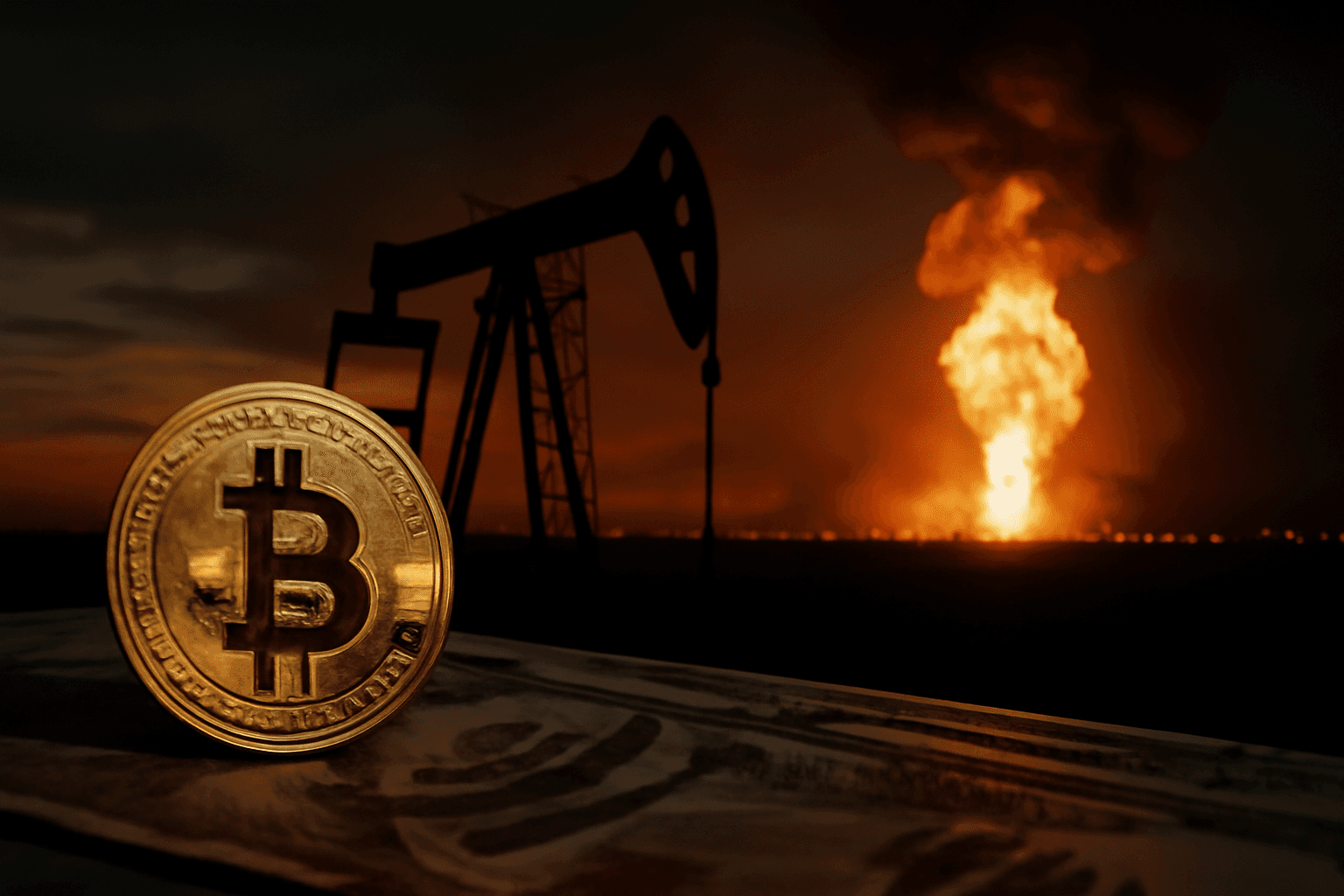
Bitcoin's value has dipped to around $63,000, reflecting a 2% decline over the last day as escalating tensions in the Middle East affect global markets. The recent U.S. military strikes on Iran have reignited fears, and in response, Tehran has declared the Strait of Hormuz closed until further notice. This strategic waterway is crucial as it handles about 20% of the world’s oil shipments, and its closure has already impacted tanker traffic significantly.
As the situation unfolds, oil prices are reacting sharply. Brent crude oil surged by 4.5% as trading resumed after the weekend, driven by fears of supply disruptions. This pattern is reminiscent of earlier instances when Iran initiated similar actions, causing oil prices to spike dramatically. For instance, back in March, Brent soared past $100 per barrel, marking a significant increase that drew attention from market analysts.
The U.S. Central Command has initiated a third wave of strikes targeting Iranian capabilities, following attacks on commercial vessels. These developments have led to notable price movements in various assets, including cryptocurrencies. Bitcoin, in particular, has shown a more tempered response compared to earlier conflicts, where it suffered sharp declines. Just last week, Bitcoin fell below $62,000 as news of the ceasefire's breakdown emerged, leading to significant liquidation of bullish positions in the crypto market.
In addition to the immediate geopolitical impacts, the oil price surge adds complexity for the Federal Reserve as they prepare for upcoming inflation data releases, including the consumer price index (CPI) and producer price index (PPI). With inflation concerns already at the forefront, rising energy prices could pose significant challenges for monetary policy moving forward.
Other cryptocurrencies are also feeling the effects of the turmoil. Ether has maintained a position close to $1,800, while XRP trades at $1.09. Meanwhile, Solana's value has dropped by 5% over the past week, illustrating the volatile landscape. As traders navigate these uncertain waters, many are left wondering how this geopolitical unrest will influence broader market trends in the coming days.
This material is for informational purposes only and is not financial advice.