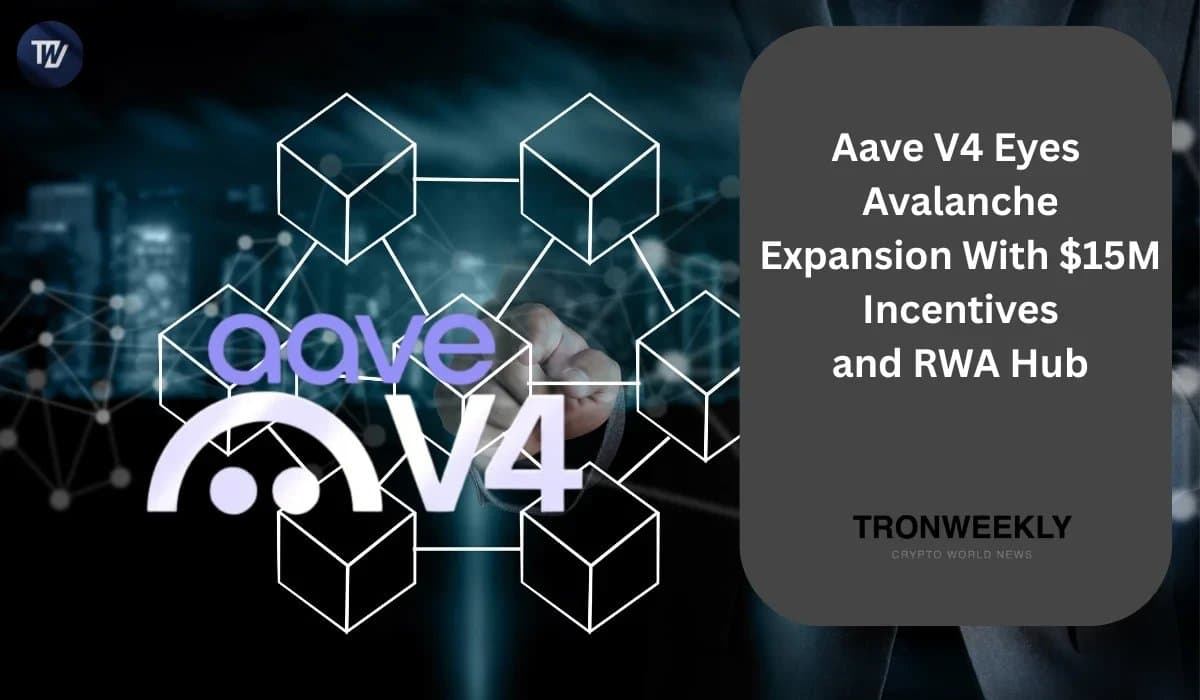
Aave is gearing up to roll out its advanced lending protocol, Aave V4, on the Avalanche blockchain, backed by an impressive $15 million in milestone-based incentives from the Avalanche Foundation.
The proposal, currently undergoing a governance temperature check, aims to position Avalanche as one of the first significant blockchain ecosystems beyond Ethereum to adopt Aave V4's innovative hub and spoke architecture, which includes a dedicated Real-World Asset (RWA) hub.
Since 2021, Aave has established a solid presence on Avalanche, providing a pre-existing user base and deep liquidity that could significantly accelerate the adoption of Aave V4.
One notable feature of this proposal is the incentive model introduced by the Avalanche Foundation. The $15 million will be tied to key growth performance indicators such as Total Value Locked (TVL), borrowings, and protocol revenues. This model seeks to encourage overall ecosystem growth rather than just increase liquidity.
Moreover, the foundation plans to assist with various initiatives, including marketing, business development, treasury management, and user acquisition, targeting centralized exchanges, fintech companies, and wallets. Additionally, they will facilitate the introduction of new crypto assets into the protocol.
The RWA Hub aspect of the proposal has attracted considerable interest. Avalanche is positioning itself as a potential center for tokenized real-world assets and institutional blockchain applications, while Aave V4’s flexibility allows for the creation of independent markets with tailored risk parameters.
Building on a Solid Foundation
Aave's relationship with Avalanche began in 2021 with the launch of Aave V2 as part of the Avalanche Rush incentive program, where Aave achieved a remarkable $2 billion in TVL through over $8 million in incentives. Following that, Aave V3 debuted in 2022, backed by another $7 million in ecosystem incentives, further boosting Aave's TVL from $200 million to over $1 billion.
As the proposal moves forward, community feedback has been largely positive, although some delegates urge clearer criteria for measuring incentives and governance related to the RWA Hub's risk management.
If the governance approves the temperature check, the proposal will proceed to the ARFC stage, refining deployment details, supported tokens, oracle configurations, and borrowing limits.
This information is for educational purposes only and should not be considered financial advice.