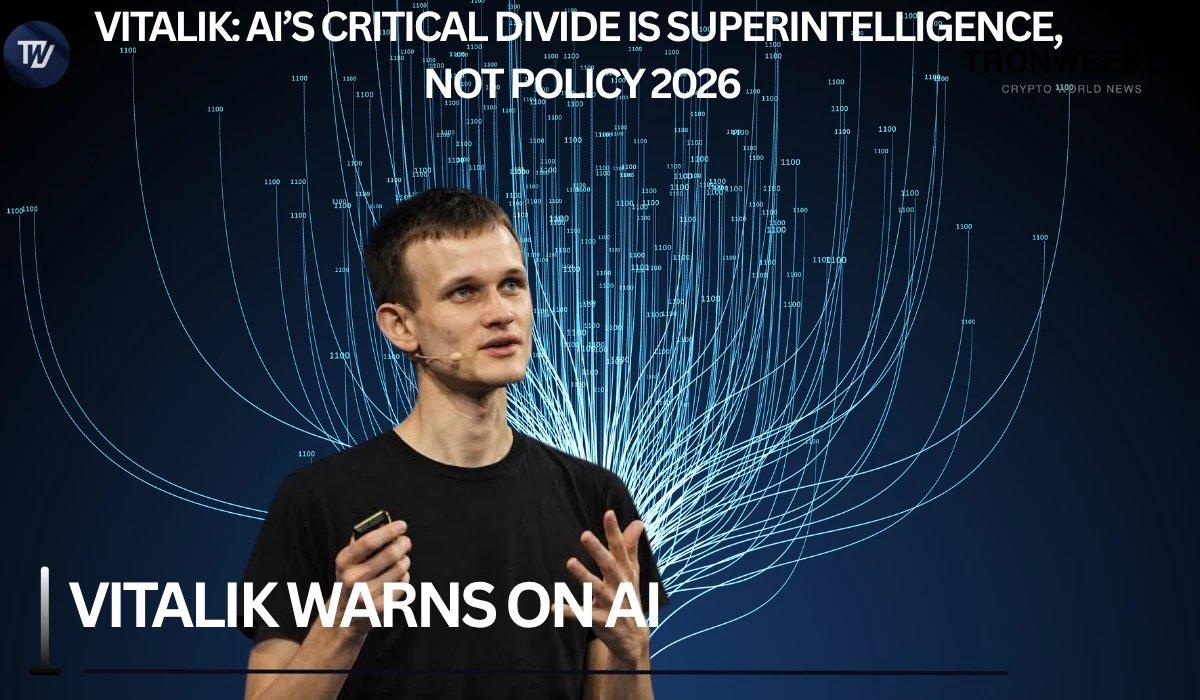
Vitalik Buterin, co-founder of Ethereum, recently shared his insights regarding the ongoing discourse on artificial intelligence. He emphasized that the primary difference among AI advocates is not about regulations or political views, but rather a fundamental question of whether superintelligence is imminent or simply a further step in technological development.
Understanding Buterin's Perspective
Buterin's assertion highlights a crucial aspect of the AI debate. On one hand, there are concerns that advanced AI poses an existential threat that necessitates worldwide collaboration. On the other hand, some perceive AI as just another software that will evolve over time. The implications of this divide are especially significant for the crypto community, as it may influence how blockchain technologies are built to support verifiable AI, decentralized computing, and agent coordination.
The Impacts on Development and Capital
This philosophical split will reshape how developers allocate resources and design systems. With the potential emergence of highly sophisticated AI, there is an escalating demand for censorship-resistant hardware and networks that function without central authority. Ethereum, Bittensor, and modular chains are identified as potential frameworks for handling these coordination tasks.
On one side of the spectrum, proponents of AI in 2040 predict the rise of some form of superintelligence, while skeptics think that AI will follow a more mundane trajectory, focusing on improving tools for efficiency. The crypto space's evolving landscape will be shaped by these contrasting views, which could affect investments and market dynamics.
As Buterin pointed out, the industry is being nudged to develop solutions that cater to both possible futures. Expectations for 2026 include the establishment of standards for verifying AI capabilities, decentralized distribution of computational resources, and more precise regulations concerning autonomous agents.
This content is for informational purposes only and should not be considered financial advice.