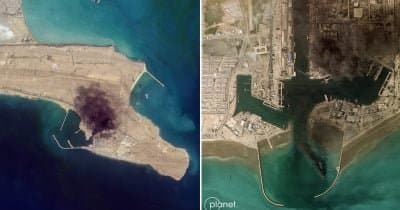
The United States has widened its military operations against Iran, extending strikes beyond the Strait of Hormuz to secretive inland targets. This marks a clear intensification of hostilities following the breakdown of a ceasefire earlier this month. Initially focused on securing maritime routes, the US now appears to be targeting Iran's military logistics and command centers across the country.
Details of the Expanded Military Campaign
According to reports from Al Jazeera and satellite imagery analyzed by Fox News, recent US and Israeli strikes have caused fires and damage at various Iranian naval bases and facilities located far from coastal areas. This strategy suggests a shift from defensive actions protecting shipping lanes to a more aggressive posture aimed at crippling Iran's broader military infrastructure.
Market predictions reflect this shift, with the likelihood of a US invasion of Iran before the end of 2026 jumping from 16% to 27.5% within a week, revealing rising concerns among analysts about the conflict's trajectory. The new focus on inland targets indicates an intent to disrupt command and control systems vital to Iran’s military operations.
Reactions and Regional Implications
The US expansion in strikes has fueled reciprocal attacks and heightened tensions throughout the Middle East. Observers are closely watching diplomatic efforts and military movements on both sides for signs of either escalation or attempts at de-escalation. any deployment of US troops to the Iranian border or official announcements from US defense officials could signal further military engagement.
Meanwhile, Iran's response with missile attacks and other military actions continues to provoke instability in the region, impacting neighboring countries and global markets. The ongoing campaign involving the US and Israel against Iran and its allies is drawing in multiple actors, raising stakes significantly.