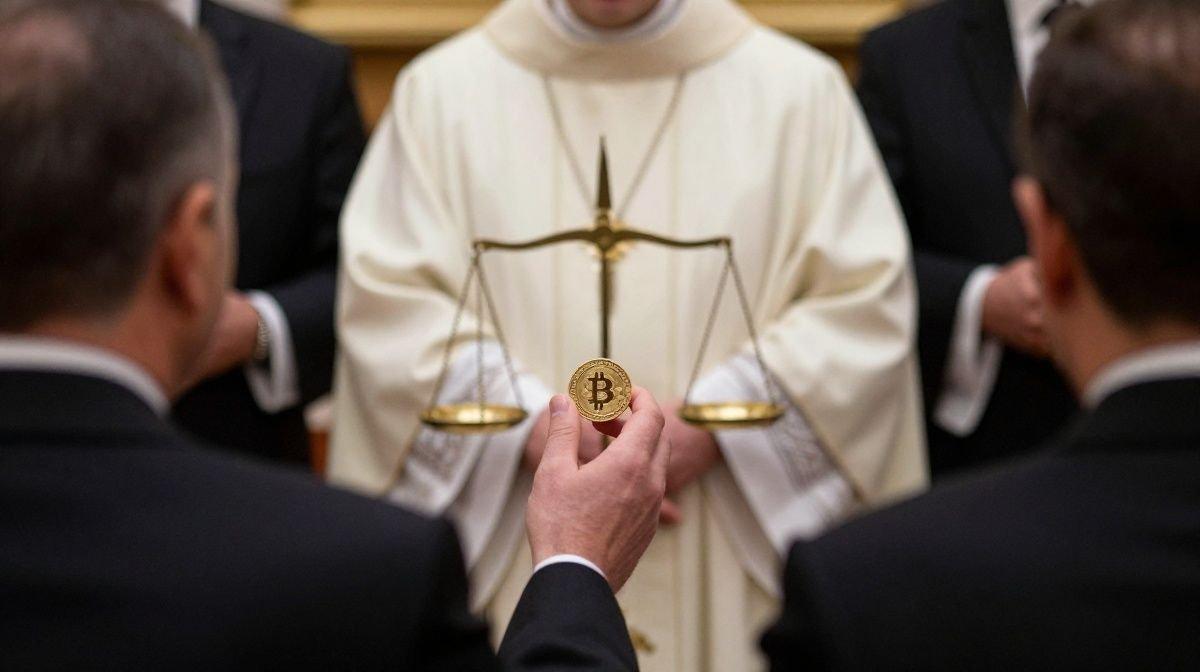
In a surprising twist, the Catholic Church has emerged as a vocal opponent of a significant piece of cryptocurrency legislation in the U.S., the CLARITY Act. This development comes at a troubling time for the crypto market, with Bitcoin (BTC) now trading around $59,800 after slipping below the crucial $60,000 mark this week.
This protest is not isolated; it's a coordinated campaign rooted in faith, targeting what the crypto sector has labeled a critical provision. The controversy has the potential to alter the legislative framework as Congress heads towards its August recess.
What’s Behind the Backlash From Catholic Leaders?
On June 23, over 80 Catholic leaders, organizations, and advocates sent a letter to Senate leadership expressing their concerns regarding key sections of the bill. Addressed to Senate Majority Leader John Thune and Senate Democratic Leader Chuck Schumer, the letter warned that certain provisions in the CLARITY Act could undermine safeguards against illegal finance, potentially offering criminal organizations avenues to exploit digital asset networks. This letter was spearheaded by the Alliance to End Human Trafficking, a faith-based national network.
The argument is framed around moral principles. "The Catholic Church has consistently taught that economic systems and markets must prioritize the well-being of individuals, especially the marginalized and vulnerable," the letter emphasized, stating that innovation should not compromise human dignity or public accountability.
The news of this opposition has intensified the already somber sentiment in the cryptocurrency market. Ethereum (ETH) was trading around $1,567, while XRP hovered near $1.04 and Solana (SOL) was close to $65 all presenting a stark picture of widespread losses across major cryptocurrencies.
Understanding Section 604 of the CLARITY Act
The disagreement does not encompass the entirety of crypto regulation but focuses specifically on Section 604, also known as the Blockchain Regulatory Certainty Act (BRCA). This section aims to provide legal protections to developers of decentralized blockchain software by limiting their liability for user activities.
Contentions arise from differing perspectives. The coalition argues that by excluding non-custodial developers from money-transmitter obligations, Section 604 diminishes the transaction-monitoring and suspicious-activity-reporting frameworks essential for anti-money laundering efforts. Conversely, industry proponents view this provision as a necessary safeguard for developers. Many within the crypto community have asserted that the removal of the BRCA would make them withdraw their support altogether.
This creates a stalemate: the clause under intense scrutiny from the Church is the same one the crypto industry refuses to negotiate. Resolving this dispute in favor of one side jeopardizes the bill's support from the other.