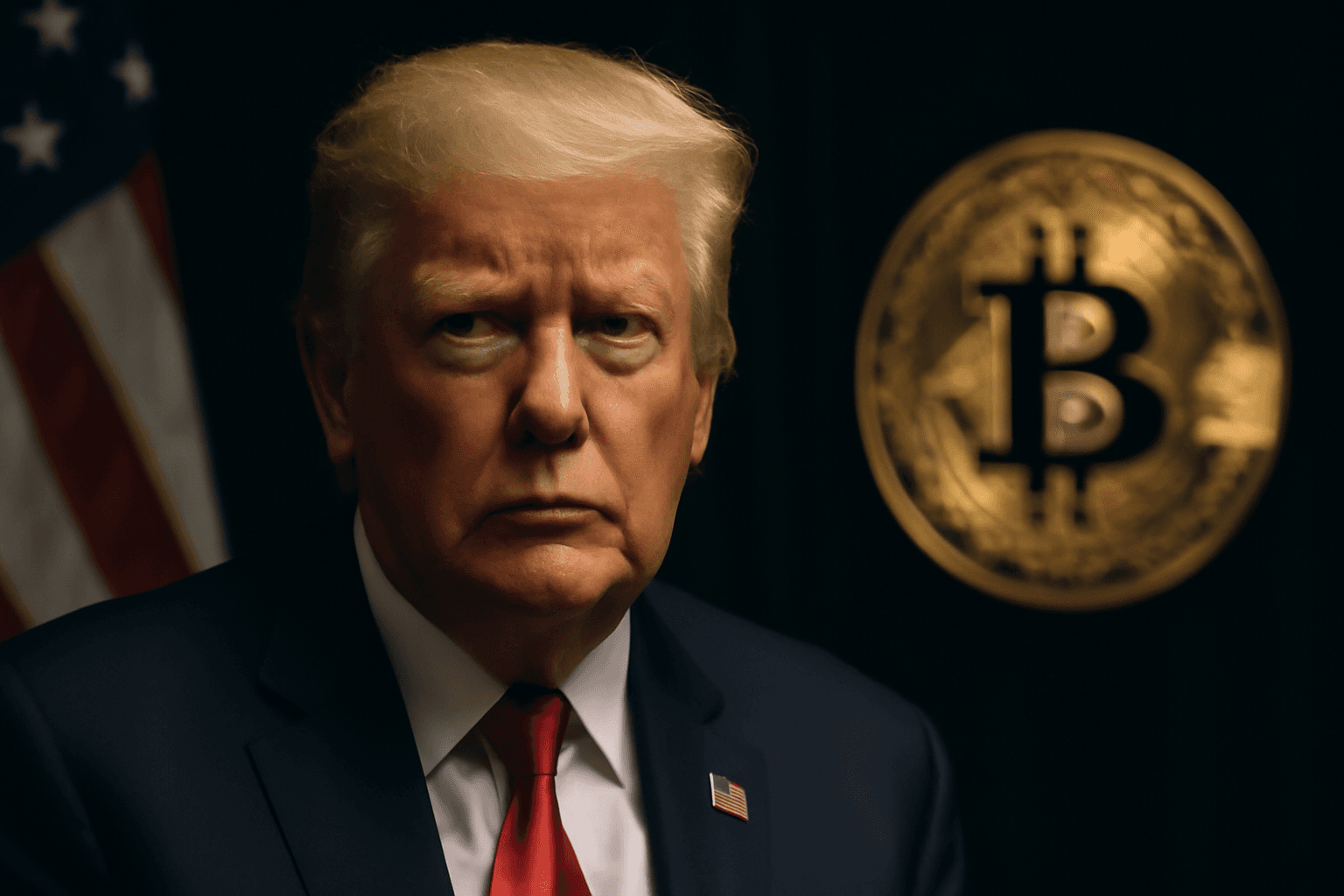
On July 12, Bitcoin hovered just above $64,000 at 11:30 a.m. EDT, as former President Donald Trump announced the end of a temporary ceasefire with Iran. This declaration adds a new layer of uncertainty to the markets, which are gradually recovering from a particularly challenging month.
In a post to Truth Social on July 11, Trump indicated that while discussions with Iran would continue, any truce had been officially terminated. He emphasized, “The Islamic Republic of Iran has asked us to continue ‘talks’. We have agreed to do so, but the United States has stated to them, in no uncertain terms, that the Cease Fire is OVER! 1000 Missiles are Locked and Loaded…” His statement followed a series of U.S. airstrikes targeting Iranian military sites and Iranian assaults on commercial vessels in the Strait of Hormuz.
At the time of reporting, Bitcoin's price was at $64,134, marking a 0.6% increase over the last 24 hours, while its market cap reached $1.283 trillion. It remains approximately 49.2% lower than its peak in October 2025, necessitating a cautious outlook among traders.
Interestingly, the price dynamics come after a notable rebound in early July, recovering from lows near $57,800. During this period, short liquidations surpassed $450 million in just one day on July 6, while spot Bitcoin ETFs enjoyed net inflows totaling $266 million, largely driven by Blackrock’s IBIT.
As the tension with Iran escalates, the fallout is now spilling into broader markets, impacting global trade. The Islamic Revolutionary Guard Corps (IRGC) has reportedly closed the Strait of Hormuz “until further notice,” following attacks on vessels it considered unauthorized. The situation has disrupted typical transit levels, which normally see between 120 to 140 ships a day, dwindling to a mere 10 on certain days.
Furthermore, the surge in oil prices, which has fluctuated between 5% and 6% due to conflict-related headlines, is influencing risk appetites across both stocks and cryptocurrencies.
As Bitcoin attempts to stabilize, market analysts caution that the ongoing geopolitical tensions could prolong the current bearish sentiment, particularly as over half of Bitcoin's circulating supply is still underwater.
This material is informative and should not be considered financial advice.