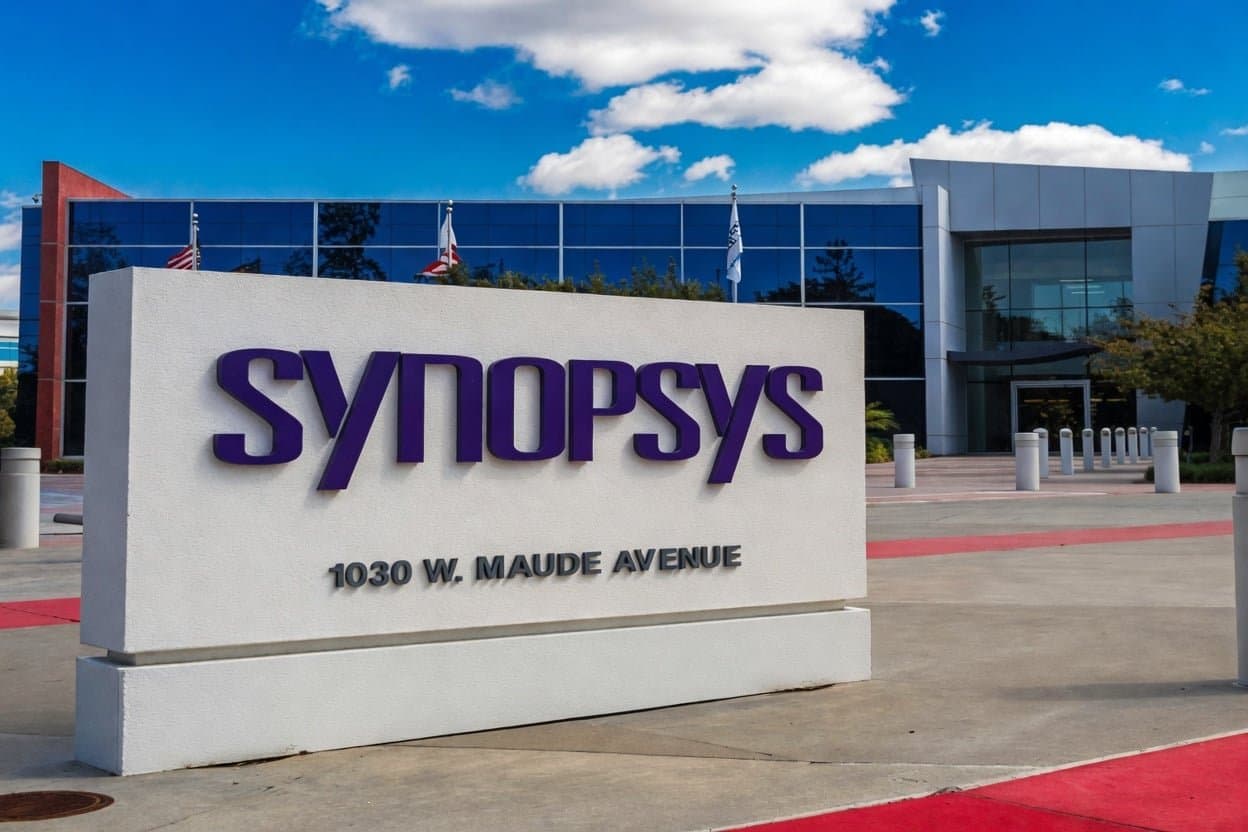
Synopsys (SNPS) saw its shares plummet nearly 12% on Friday, falling around 5.62% to $393.60, as part of a widespread sell-off in the semiconductor sector. This decline aligns with a notable drop in the Nasdaq, which fell by 2.22%, and the S&P 500, down 0.96%. Investors appear to be pulling back from tech stocks, particularly those heavily invested in artificial intelligence.
Adding to market unease, a recent Reuters report revealed that Synopsys intends to discontinue its legacy manufacturing process control software, which is vital for monitoring chip production. This strategic decision aims to shift resources toward developing higher-margin AI design tools, although it has raised concerns among its clients, including major chipmakers like Samsung Electronics and SK Hynix.
Analysts Remain Bullish Despite Market Pressure
Despite the bearish market conditions, analysts maintain a positive outlook on Synopsys. Benchmark initiated coverage with a Buy rating and set a price target of $570. However, this optimistic assessment has done little to mitigate the stock's decline as investor sentiment remains cautious, with many avoiding AI-focused stocks.
Year-to-date, SNPS shares are down 11.22%, underperforming the broader tech sector. The stock's market cap stands at $81.43 billion, with an average daily trading volume of approximately 1.88 million shares. Technical indicators reflect a negative sentiment, with the Relative Strength Index (RSI) at 22.49, indicating an oversold condition.
Technical Analysis Signals Ongoing Challenges
The technical outlook for Synopsys appears challenging. The stock is trading significantly below its moving averages, being 13.2% under the 20-day simple moving average and 18.7% below the 50-day SMA. Key resistance lies around $442, while immediate support is at $379.50, just above its 52-week low of $376.18.
In addition to Synopsys' challenges, rising chipmaking costs due to TSMC’s updated spending plans, along with persistent geopolitical tensions in the Middle East, are putting further strain on the semiconductor market. Investors will need to watch these developments closely as they navigate the current environment.
This material is for informational purposes only and should not be considered financial advice.