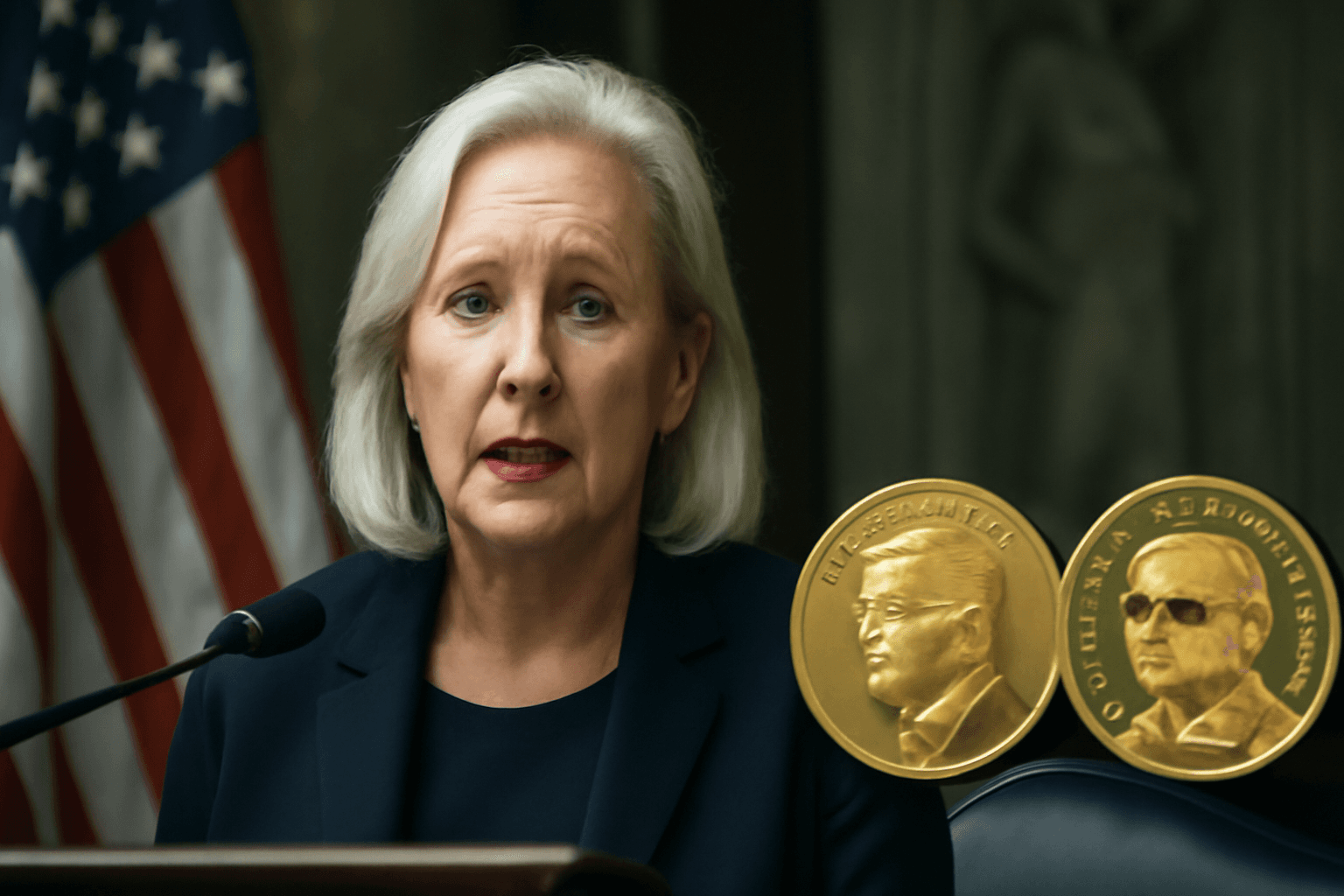
The ethics debate surrounding President Donald Trump's cryptocurrency profits is heating up, as Senator Kirsten Gillibrand advocates for a ban on elected officials from benefiting from digital assets they create or endorse while serving in office.
On July 3, 2026, Gillibrand reiterated her call for Congress to implement measures that would prevent not only elected officials but also their spouses from issuing or sponsoring digital assets. This proposal gained traction following the alarming revelation that Trump netted a staggering $636 million from a memecoin, which was reported as his primary income source for the year 2025.
Details of the Proposed Ban
Gillibrand's legislation aims to outlaw the issuance and endorsement of digital currencies, particularly memecoins, by top public figures including the president and lawmakers. This initiative also includes new information about First Lady Melania Trump, who reportedly introduced her own memecoin and amassed $6 million from non-fungible tokens (NFTs) and various digital collectibles.
These financial disclosures have fueled Gillibrand's stance, arguing for ethics regulations to guide future cryptocurrency legislation. She stated, “This is a commonsense requirement that should get broad bipartisan support public officials and their spouses should not be issuing memecoins.”
Background on Gillibrand's Ethics Advocacy
This demand is the latest chapter in Gillibrand's ongoing effort to integrate ethical limitations within federal cryptocurrency regulations, which has been underway for over a year. In May 2025, she collaborated with Senator Jeff Merkley on the End Crypto Corruption Act, which sought to curtail digital asset issuance by the president and Congress members, which included memecoins and stablecoins.
At the Senate discussions regarding the Guiding and Establishing National Innovation for U.S. Stablecoins (GENIUS) Act in 2025, Gillibrand championed the inclusion of clauses addressing Trump's cryptocurrency dealings, though similar provisions were ultimately stripped from the bill due to concerns about its length and complexity. Trump signed the GENIUS Act into law in July 2025.
Future Implications and Ethics Concerns
During her recent appearance at the Consensus Miami conference in May 2026, Gillibrand emphasized her commitment to ethics measures in any future digital asset regulations. She cautioned that the proposed Digital Asset Market Clarity (CLARITY) Act might face hurdles in the Senate if it did not incorporate restrictions on the president's personal cryptocurrency endeavors. The discussion around ethical standards in cryptocurrency legislation continues to gain momentum as these disclosures come to light.