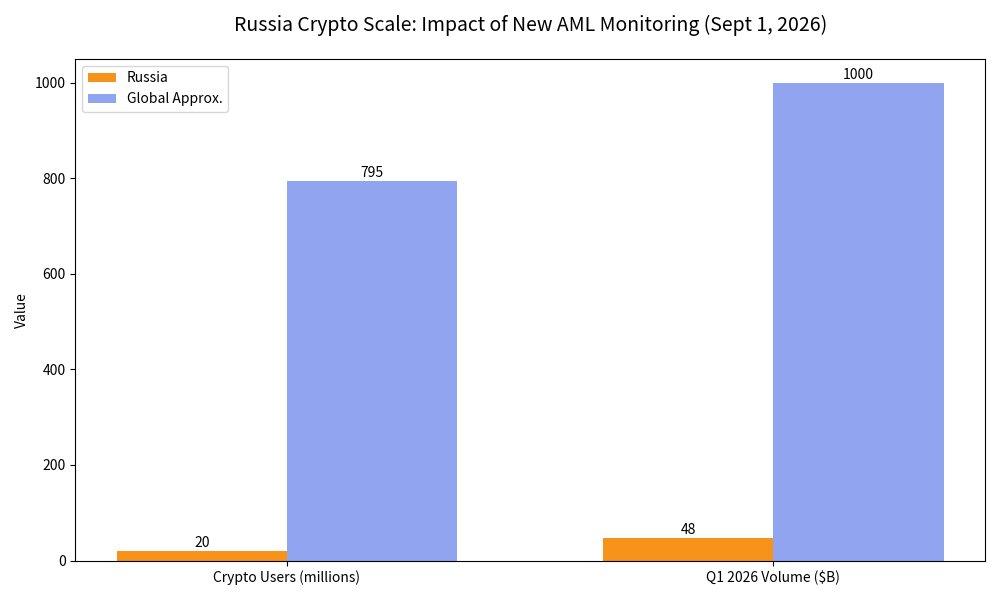
Russia has announced a postponement of its much-anticipated anti-money laundering (AML) legislation concerning cryptocurrencies. The new implementation date is set for September 1, 2026, amid increasing movement in the United States regarding the CLARITY Act, highlighting a notable divergence in regulatory approaches between these two nations.
Significance of the Delay
This delay is crucial for several reasons, influencing both domestic and international perceptions of Russia's regulatory environment in the cryptocurrency sector. The comprehensive AML legislation aims to empower Rosfinmonitoring, the Russian Federal Financial Monitoring Service, with extensive oversight over all digital asset transactions.
- The law will mandate monitoring of crypto transactions exceeding 60,000 RUB (approximately $760).
- Payers and payees' names, along with wallet addresses, must be identified in such transactions.
- The bill had originally been set for implementation on July 1 before the delay.
As such, this legislation embodies the Russian government's effort to enhance transparency and combat illicit financial flows linked to crypto activities.
Implications for the Crypto Landscape
In contrast, the U.S. progress on the CLARITY Act has provided a framework aimed at clarifying the regulatory stance on cryptocurrencies, which might encourage innovation and investment in the industry. As both countries navigate their respective regulatory landscapes, businesses and investors need to stay informed about how these changes might shape the future of cryptocurrency operations.
Looking Ahead
With the postponement of Russia's AML crypto bill, the coming months will be pivotal. Stakeholders will be keen to observe how the implementation of this law unfolds and its potential effects on the Russian crypto market. Meanwhile, developments in the U.S. regarding the CLARITY Act may set a contrasting example that could influence global regulatory standards.
This material is for informational purposes only and is not financial advice.