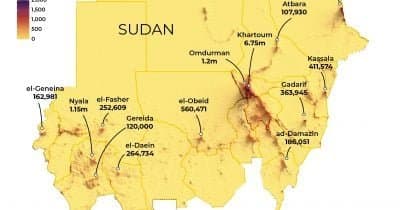
The European Union's latest move to curtail the funding of the ongoing civil war in Sudan marks a significant shift in its foreign policy approach. On July 13, 2026, the EU Council enacted a ban on all gold sourced from Sudan, a clear effort to block revenue streams that are vital for sustaining the civil conflict that has plagued the nation since April 2023.
This ban not only targets the gold trade but also includes restrictions on the sale and supply of mercury and cyanide, essential chemicals used in gold mining. By cutting off these resources, the EU aims to hinder the very extraction process that fuels the conflict.
Gold as a Weapon in the Civil War
The civil strife in Sudan sees the Sudanese Armed Forces (SAF) clashing with the Rapid Support Forces (RSF), both of which utilize gold mines to finance their military operations. The RSF has taken control of key mining areas in Darfur and Kordofan, while the SAF manages extraction efforts in eastern Sudan. In 2024, Sudan’s official gold exports were estimated at $1.59 billion, although this figure is likely inflated due to extensive smuggling operations. A large volume of this gold is believed to filter through networks leading to the United Arab Emirates.
Challenges to Effective Implementation
Despite the ambitious nature of the EU's sanctions, challenges remain. Notably, the sanctions do not extend to entities in the UAE, which is recognized as a significant hub for processing and rerouting conflict gold. This gap means that gold could easily be refined in Dubai and re-enter global markets under a different label, minimizing the effectiveness of the EU’s measures against conflict financing.
While the ban may not drastically affect global gold prices since Sudan's exports account for only a small fraction of the $250 billion global market the prohibition of mercury and cyanide could lead to a gradual decrease in gold production in Sudan. Such a decline may jeopardize the livelihoods of numerous artisanal miners who depend on gold extraction.
The EU’s current strategy focuses heavily on traditional commodities, lacking any mention of modern financial technologies like digital assets or blockchain-based gold trading, potentially leaving gaps that could be exploited in the future.
This material is for informational purposes only and does not constitute financial advice.