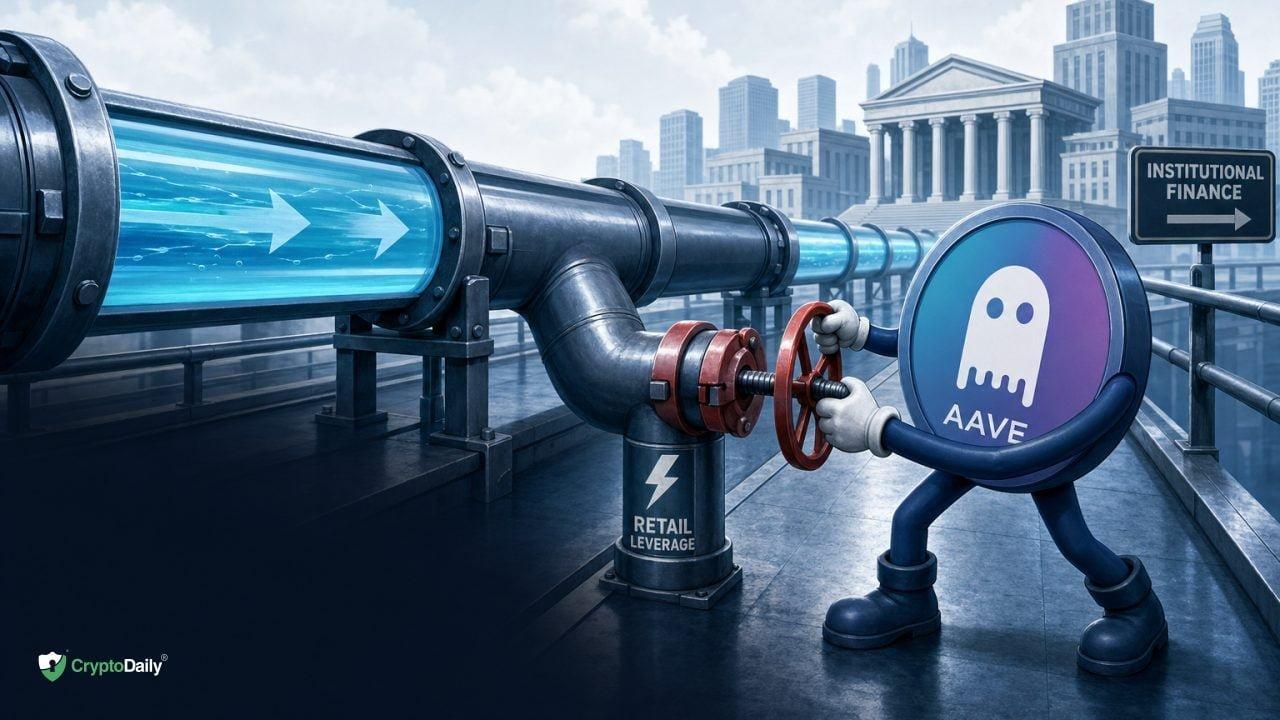
The world of decentralized finance (DeFi) is undergoing a significant shift, leaving many to ponder the sustainability of lending protocols in the absence of retail leverage. Aave's Horizon market emerges as a critical test case. It raises an essential question: Can lending platforms evolve into legitimate businesses if we remove the retail layer?
Understanding Aave Horizon
Aave Horizon targets tokenized treasuries, credit, and various real-world assets, operating under a whitelisted access protocol. This model diminishes speculative trading behavior, focusing instead on serious cash management strategies. The attractiveness lies in its more stable collateral and predictable returns. However, the real challenge is gauging demand: without retail investors driving activity, who will be borrowing, and what interest rates can be expected?
As per independent reports, Aave Horizon currently manages around $540 million in assets, with approximately $163 million actively borrowed. This places it among the largest venues available for lending real-world assets (RWAs) in decentralized finance. Aave Labs noted net deposits reaching above $450 million while borrowing stood at $135 million, highlighting significant momentum.
Target Audience and Model Dynamics
The primary users of Aave Horizon include funds, DAOs, corporates, and market makers that have undergone KYC verification. They are looking for opportunities that offer cash efficiency, the capability for yield stacking, or basis trades without exposing themselves to the inherent volatility typically associated with protocols.
This market operates through whitelisted pools, which can quickly adapt to changing circumstances as risk teams continuously fine-tune the parameters. How borrowing rates play out largely depends on treasury yields and credit spreads, especially now that retail activity has diminished. The associated risks include potential liquidity challenges, shifts in borrowing caps, and reliance on oracle and legal infrastructure.
Key Components and Risks
In essence, Aave Horizon is constructed around tokenized assets, focusing on stable cash flows rather than volatile cryptocurrencies. Typically, the supply side consists of funds and treasuries depositing cash equivalents to earn yields and protocol rewards, while the borrowing side remains discerning. With less retail activity, the borrowing demand is largely filled by market makers and funds adjusting their strategies.
Aave recently reported a surge in net deposits, which has brought about a solid foundation for the RWA market. However, challenges remain. Key risks that participants must consider encompass liquidity constraints, potential changes in borrowing caps, and traditional smart contract vulnerabilities. The operational stability of this lending model will be closely monitored as it seeks to establish a foothold in a transformed financial landscape.
This material is for informational purposes only and does not represent financial advice.